


Overview
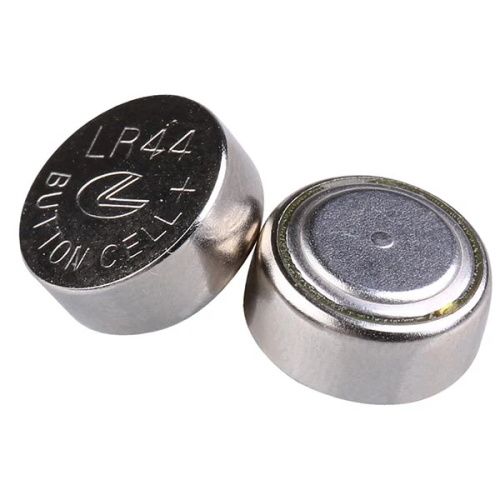
●The LR44 is a small 1.5-volt button cell commonly used in watches, calculators, toys, thermometers, and many wearable devices. Because many devices rely on similar form factors and chemistry, a variety of “equivalents” exist that can substitute for LR44 under the right conditions. The key idea is matching voltage, diameter, and thickness as closely as possible, while understanding potential differences in capacity, discharge curves, and temperature performance. This article consolidates the main equivalents, when to use them, and practical tips to ensure reliable operation.
What “equivalent” means for LR44
●An equivalent battery shares the same physical dimensions (roughly 11.6 mm diameter) and nominal voltage (1.5 V) and is intended to be interchangeable in many devices. However, chemistries differ: alkaline LR44 vs silver-oxide SR44 or other variants can have different discharge profiles and capacities, which affects how steady the voltage is over time and how long the battery lasts in a given device. When substituting, check compatibility notes from the device manufacturer or battery retailer.
Primary chemical families and common equivalents
●Alkaline LR44 (the classic type): Typically sold as LR44 or A76, and used in many consumer electronics. Common substitutions include LR1154 and G13, which share voltage and size but may vary slightly in capacity. These are often labeled as alkaline equivalents rather than exact models, but generally work in low-drain devices.
●Silver-oxide equivalents: SR44 (also referenced as 357 or 303 in some markets) are the same size but offer a flatter discharge curve and higher capacity in many cases. They maintain a stable voltage longer, which benefits watches and precision instruments. If the device tolerates a slightly higher nominal voltage (1.55 V typical for SR44), performance may be improved in low-drain scenarios.
●Other designations you may encounter: L1154 and LR1154 are alkaline equivalents with the same 1.5 V rating and similar dimensions; AG13 and A76 are marketing names used for substitutes that fit the same footprint. In practice, these brands may come from different manufacturers but are designed to be cross-compatible with LR44 in compatible devices.
Common practical substitutes and when to use them
●Alkaline substitutes:
○LR1154 / L1154: Interchangeable with LR44 for many watches, calculators, and small toys. Capacity is typically in the 110–130 mAh range for alkaline variants. Use when the device is a low-drain or average-drain consumer gadget and when the device’s manual specifies LR44 or LR1154 as compatible.
○G13: A common alkaline substitute with similar voltage and footprint; suitable for devices that explicitly accept LR44-family batteries.
●Silver-oxide substitutes:
○SR44: Directly interchangeable in many devices; often provides longer life and steadier voltage under low drain. When longevity and voltage stability are important, SR44 is preferred.
○357 / 303: Common cross-references for SR44 in different markets; effectively the same size and voltage, with silver-oxide chemistry. Ideal for devices that benefit from stable energy output.
●Special cases and caveats:
○L1154 vs LR44: Minor physical differences (e.g., thickness tolerances) can exist. Most devices tolerate minor variation, but some tight-fitting compartments or lids may require exact dimensions. Always verify fit with the device or consult the manufacturer if exact tolerances are a concern.
○Two LR44s in series: Some devices that require higher energy delivery for short periods can be powered by two LR44s in series, effectively doubling the voltage to 3 V. This approach is not universally recommended and should only be used if the device is explicitly designed or tested for such a configuration. Alternatives include using a device that accepts a higher capacity single cell or a proper battery holder/pack designed for that purpose.
○Temperature and performance: Silver-oxide types generally perform better in low-temperature environments and provide more stable voltage, which can be critical for timekeeping or precision electronics. Alkaline LR44 cells may show greater voltage sag under higher loads. Choose based on the device’s typical operating temperature and current draw.
Choosing the right substitute
●Check the device’s manual or battery compartment markings for the exact model family (LR44, LR1154, AG13, etc.). If the device only specifies “LR44” or “A76,” you have a broad range of acceptable substitutes within the LR44 family.
●Consider the device’s power profile:
○For timekeeping, key devices, or wearables where voltage stability is crucial, SR44 or 357/303 may provide better long-term performance.
○For simple, high-drain devices (rare at this size) or where the device explicitly calls out alkaline chemistry, LR44 or LR1154 may be appropriate.
●Physical fit matters: If the battery compartment is very snug, ensure the substitute’s thickness is compatible. Minor differences may exist among alkaline variants, while silver-oxide variants typically fit the same footprint but verify with a physical check.
Maintenance and safe handling
●Use fresh batteries from reputable brands to minimize leakage risk and ensure consistent performance. Do not mix old and new batteries or different chemistries in the same device.[5]
●If a device shows rapid voltage drop or short operating life after replacement, re-check the exact battery type in the device manual and consider trying a different equivalent within the LR44 family.
●Store spare batteries in a cool, dry place and avoid exposing them to high temperatures or direct sunlight to preserve capacity and prevent leakage.
Summary of key equivalents (at a glance)
●Alkaline family: LR44, LR1154, L1154, G13, A76, AG13 – same general size and 1.5 V, suitable for many low-drain devices.
●Silver-oxide family: SR44, 357, 303 – same size, higher and more stable voltage, longer life in appropriate devices.
●Special note: In some markets,designation variations exist (e.g., L1154, LR1154, AG13, A76) and cross-compatibility is common but verify fit and electrical needs per device.
FAQ About LR44 Battery Equivalents
What are the equivalent models of LR44 batteries? D
irect equivalent models of LR44 batteries include AG13, A76, L1154, 357, etc. These batteries have basically the same physical dimensions, voltage and other parameters as LR44 and can be used interchangeably.
Can SR44 batteries replace LR44 batteries?
SR44 batteries are usually silver oxide batteries with a voltage of 1.55V, while LR44 are alkaline batteries with a voltage of 1.5V. In some devices that are not sensitive to voltage, SR44 can replace LR44, and silver oxide batteries perform better in terms of capacity and voltage stability. However, in some precision devices, the slightly higher voltage of SR44 may cause equipment failure, so replacement is not recommended in this case.
What should be noted when replacing LR44 equivalent batteries?
First, ensure voltage consistency, with the deviation within ±0.2V. Second, pay attention to physical dimensions. The standard size of LR44 is 11.6mm in diameter × 5.4mm in height, and the size of the replacement battery should match it to avoid failure to install or damage to the equipment. In addition, pay attention to terminal polarity. Some equivalent batteries such as 357A may have opposite terminal polarity to LR44. Carefully confirm during installation to avoid reverse connection and equipment damage.
What are the performance differences between different equivalent batteries?
Alkaline LR44 batteries have low cost and medium energy density. They will lose 10% of their capacity at -30°C, and high-temperature environments (>50°C) will accelerate their self-discharge. Silver oxide batteries such as SR44 can work at temperatures as low as -30°C, have a lower self-discharge rate in high-temperature environments, and can better maintain voltage in high-power-consuming devices, but their cost is relatively higher.
Can zinc-air batteries be used as equivalent batteries for LR44?
Zinc-air batteries such as PR48 have a voltage of 1.4V, which is different from the 1.5V voltage of LR44. Moreover, zinc-air batteries need to be exposed to air to work, so they are generally not recommended as equivalent batteries for LR44 unless the device explicitly supports zinc-air batteries.
Can CR2032 Battery Replace LR44?
Generally, CR2032 batteries cannot replace LR44 batteries. The reasons are as follows:
Voltage difference: The voltage of LR44 batteries is 1.5V, while that of CR2032 batteries is 3V. The voltage of CR2032 is twice that of LR44. Using CR2032 to replace LR44 may cause damage to devices that are sensitive to voltage, affecting their normal operation.
Size difference: LR44 batteries have a diameter of approximately 11.6mm and a height of 5.4mm, while CR2032 batteries have a diameter of 20mm and a thickness of 3.2mm. The size of CR2032 is much larger than that of LR44, and it may not be able to fit into the battery compartment of devices using LR44 batteries. Reference: CR2032 vs LR44: What are Differences
Capacity and application scenarios: LR44 batteries are alkaline batteries with relatively low capacity, suitable for low-power devices such as calculators, watches, and laser pointers. CR2032 batteries are lithium-manganese batteries with higher energy density and larger capacity, which are more suitable for high-power devices such as car key fobs, fitness trackers, and digital scales.
投稿者の人気記事



-
LoveChip
さんが
2025/10/29
に
編集
をしました。
(メッセージ: 初版)
ログインしてコメントを投稿する