


In the era of immersive entertainment, real-time communication, and smart visual experiences, Multimedia Integrated Circuits (Multimedia ICs) serve as the unsung heroes. These specialized semiconductor devices are engineered to process, encode, decode, and transmit audio, video, and graphical data—turning raw digital signals into the movies we watch, the music we listen to, and the video calls we make. Unlike general-purpose ICs, Multimedia ICs are optimized for high-speed data handling, low latency, and efficient power consumption, making them indispensable in every device that delivers multimedia content. This blog explores the definition, types, working principles, and—most critically—the wide-ranging applications of Multimedia ICs that shape our daily digital interactions.
- What Are Multimedia ICs?
A Multimedia IC is an integrated circuit designed specifically to handle multimedia data, which includes audio (sound waves), video (moving images), graphics (static or interactive visuals), and sometimes even haptic (touch) feedback. These ICs consolidate multiple functions—such as signal conversion, compression, filtering, and synchronization—into a single chip, reducing device size, cost, and power usage compared to discrete component designs.
At their core, Multimedia ICs address the unique challenges of multimedia processing:
•High Data Volumes: Uncompressed video (e.g., 4K resolution at 60fps) can generate over 12 Gbps of data—Multimedia ICs use compression algorithms (e.g., H.265/HEVC) to reduce this load without sacrificing quality.
•Low Latency: Real-time applications (e.g., video calls, gaming) require near-instantaneous processing to avoid lag; Multimedia ICs are optimized for fast signal throughput.
•Multi-Format Compatibility: They support a wide range of industry standards (e.g., MP3, AAC for audio; HDMI, DisplayPort for video) to ensure interoperability across devices.
•Power Efficiency: For battery-powered devices (e.g., smartphones, tablets), Multimedia ICs use low-power architectures (e.g., dynamic voltage scaling) to extend battery life while maintaining performance.
- Types of Multimedia ICs
Multimedia ICs are categorized based on the type of media they process or their specific function. Below are the most common and impactful types:
2.1 Audio ICs
Audio ICs focus on processing sound signals, from capture to playback. Key subcategories include:
•Audio Codecs (Coder-Decoders): Convert analog audio (e.g., from a microphone) to digital data (encoding) and digital data back to analog signals (decoding) for speakers/headphones. They support formats like MP3, AAC, FLAC, and Dolby Atmos, and often include noise cancellation and equalization (EQ) features.
•Audio Amplifiers: Boost low-power audio signals to drive speakers or headphones. Class-D audio amplifiers—common in portable devices—are highly efficient (up to 90%), generating minimal heat compared to traditional Class-A/B amplifiers.
•Audio Processors: Handle advanced audio tasks, such as surround sound decoding (e.g., Dolby Digital 5.1), voice recognition (for smart assistants like Alexa), and spatial audio (for VR headsets). They often include dedicated Digital Signal Processors (DSPs) for fast, precise calculations.
2.2 Video ICs
Video ICs process visual data, enabling high-quality display and transmission. Critical types include:
•Video Codecs: Compress/uncompress video data to reduce storage and bandwidth requirements. Modern codecs like H.265/HEVC (4K/8K) and AV1 (open-source, low-bitrate) are standard in streaming services (Netflix, YouTube) and cameras. Some video codecs also support HDR (High Dynamic Range) processing for vibrant colors.
•Display Controllers (Timing Controllers/T-Con): Manage the timing and signal flow between a device’s processor and its display (LCD, OLED, Mini LED). They convert raw video data into pixel-specific signals, ensuring smooth frame rates (e.g., 60fps, 120fps) and correct resolution (e.g., 1080p, 4K).
•Image Sensors & Signal Processors (ISP): Found in cameras (smartphones, DSLRs, security cams), ISPs enhance raw image data from image sensors (e.g., CMOS sensors). They perform tasks like auto-exposure, white balance, noise reduction, and HDR merging to produce high-quality photos/videos.
2.3 Graphics ICs
Graphics ICs specialize in rendering 2D/3D visuals, critical for gaming, design, and user interfaces. The most prominent type is:
•Graphics Processing Units (GPUs): While often associated with gaming, GPUs are powerful Multimedia ICs that process parallel streams of graphical data. They render 3D models, apply textures and lighting, and generate frames for displays. Integrated GPUs (e.g., Intel UHD Graphics) are built into CPUs for basic tasks, while discrete GPUs (e.g., NVIDIA GeForce, AMD Radeon) handle high-performance gaming, video editing, and 3D modeling.
•GPU Accelerators: Specialized GPUs (e.g., NVIDIA Tensor Cores) also support multimedia-related AI tasks, such as real-time video upscaling (e.g., NVIDIA DLSS) and facial recognition in video calls.
2.4 Multimedia System-on-Chips (SoCs)
Multimedia SoCs integrate multiple multimedia functions into a single chip, ideal for compact devices. They combine audio codecs, video codecs, GPUs, and even CPUs into one package. Examples include:
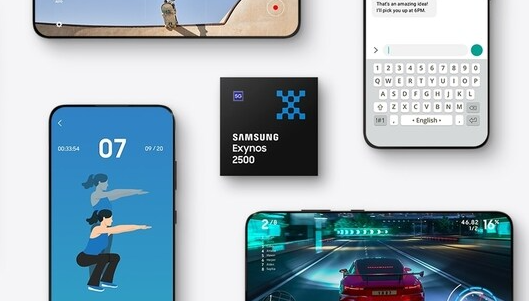
•Smartphone SoCs: Qualcomm Snapdragon, Apple A-series, and MediaTek Dimensity chips include dedicated multimedia blocks (e.g., Qualcomm Adreno GPUs, Apple Neural Engine for AI-powered video editing) to handle 4K video recording, spatial audio, and high-refresh-rate displays.
•Set-Top Box (STB) SoCs: Chips designed for streaming devices (e.g., Roku, Amazon Fire TV) that support video decoding (H.265), audio processing (Dolby Atmos), and internet connectivity. - How Do Multimedia ICs Work?
While the exact operation varies by type, all Multimedia ICs follow a core workflow: signal input → processing → output, with optimization for speed, quality, and efficiency. Below is a breakdown using a video codec IC (a common and representative example) to illustrate the process.
Step 1: Signal Input
The IC receives raw or preprocessed video data from a source—this could be a camera sensor (for recording), a storage device (e.g., SSD for playback), or an internet stream (e.g., from YouTube). For raw video (e.g., from a CMOS sensor), the data is uncompressed and high-volume (e.g., 4K video generates ~1GB per minute).
Step 2: Preprocessing
Before compression, the IC cleans and optimizes the signal:
•Noise Reduction: Removes visual artifacts (e.g., grain in low light) using algorithms like Gaussian filtering.
•Color Correction: Adjusts color balance and contrast to ensure consistency with display standards (e.g., sRGB, Rec. 2020 for HDR).
•Resolution Scaling: Resizes the video (e.g., from 4K to 1080p) to match the target device’s display or bandwidth limits.
Step 3: Compression (Encoding)
To reduce data size, the IC uses a video codec standard (e.g., H.265/HEVC):
•Spatial Compression: Analyzes individual frames (intra-frame compression) to remove redundant pixels. For example, a solid blue sky has minimal variation— the IC stores a single "blue" value for large regions instead of each pixel.
•Temporal Compression: Compares consecutive frames (inter-frame compression) to store only changes between frames. For a video of a person talking, the IC stores the static background once and only updates the moving mouth/face in subsequent frames.
•Entropy Coding: Further reduces file size by replacing common data patterns with shorter codes (e.g., Huffman coding).
Step 4: Transmission/Storage
The compressed video data is sent to its destination: over a network (e.g., Wi-Fi for streaming), to storage (e.g., SD card for recording), or to another IC (e.g., display controller for playback).
Step 5: Decompression (Decoding)
When the video is ready to be viewed, the IC reverses the compression process:
•Entropy Decoding: Restores the original data patterns from the compressed codes.
•Frame Reconstruction: Rebuilds full frames using the stored spatial/temporal data—filling in redundant pixels and background details.
•Post-Processing: Enhances the decoded video with features like HDR tone mapping (to optimize brightness for the display) or motion smoothing (to reduce judder in fast-moving scenes).
Step 6: Output
The final processed video signal is sent to the display (e.g., OLED screen, TV) as pixel-specific commands, ensuring the image is rendered accurately and in real time. - Key Applications of Multimedia ICs
Multimedia ICs are ubiquitous in modern technology, powering everything from personal devices to industrial systems. Their ability to handle audio, video, and graphics efficiently makes them critical to the following sectors:
4.1 Consumer Electronics: The Daily Touchpoints
Consumer devices rely on Multimedia ICs to deliver engaging, portable experiences:
•Smartphones & Tablets: Every smartphone contains a multimedia SoC with audio codecs (for calls/music), video codecs (for 4K recording/streaming), an ISP (for camera quality), and a GPU (for gaming/UI rendering). For example, Apple’s A17 Pro SoC includes a dedicated video encoder/decoder that supports ProRes 4K video recording, while Samsung’s Exynos chips feature Dolby Atmos-enabled audio codecs for spatial sound.
•Laptops & Desktops: Discrete GPUs (e.g., NVIDIA GeForce RTX 40-series) power gaming and video editing (e.g., Adobe Premiere Pro), while integrated audio codecs (e.g., Realtek ALC897) handle speaker/headphone output. Laptops also use display controllers to drive high-refresh-rate screens (e.g., 120Hz OLED), ensuring smooth scrolling and video playback.
•Televisions & Displays: Modern TVs include video codecs (H.265/AV1) for streaming 4K/8K content, HDR processors (e.g., Samsung Neo Quantum Processor) for vibrant colors, and audio amplifiers for surround sound. Smart TVs add multimedia SoCs to run streaming apps (Netflix, Disney+) and voice assistants.
•Portable Media Players: Devices like Apple iPods or Sony Walkmans use low-power audio codecs (supporting MP3/AAC) and Class-D amplifiers to deliver long battery life (up to 30+ hours of playback) while maintaining sound quality.
4.2 Entertainment & Gaming: Immersion Redefined
Multimedia ICs are the backbone of immersive entertainment:
•Gaming Consoles: PlayStation 5 and Xbox Series X/S use powerful GPUs (e.g., AMD RDNA 2) to render 4K/120fps games with ray tracing (realistic lighting). They also include audio processors for 3D spatial sound (e.g., Sony Tempest 3D AudioTech) and video codecs for streaming gameplay (e.g., Twitch).
•Virtual Reality (VR) & Augmented Reality (AR): VR headsets (e.g., Meta Quest 3) rely on compact multimedia SoCs (e.g., Qualcomm Snapdragon XR2 Gen 2) to process 6DoF (Degrees of Freedom) motion data, render stereoscopic 3D visuals, and deliver spatial audio—all with low latency (<20ms) to prevent motion sickness. AR glasses (e.g., Apple Vision Pro) use micro-OLED displays driven by display controllers to overlay digital graphics onto the real world.
•Home Theater Systems: AV receivers include audio processors for decoding Dolby Atmos/DTS:X surround sound and amplifiers to power multiple speakers. They also use video switchers (with HDMI 2.1 support) to route 4K/120Hz video from game consoles, Blu-ray players, and streaming devices to the TV.
4.3 Communication: Real-Time Connection
Multimedia ICs enable clear, low-latency communication across devices:
•Video Conferencing Devices: Webcams (e.g., Logitech Brio) use ISPs to enhance image quality (auto-focus, low-light correction) and video codecs (H.264/H.265) to compress streams for Zoom/Teams calls. Smart displays (e.g., Google Nest Hub) add audio codecs with echo cancellation to eliminate background noise during calls.
•Smartphones (Voice/Video Calls): Mobile SoCs include voice codecs (e.g., AMR-WB) for clear phone calls and video codecs (e.g., VP9) for WhatsApp/FaceTime video calls. Some chips (e.g., Qualcomm Snapdragon 8 Gen 3) add AI-powered noise suppression to filter out wind or crowd noise.
•IP Cameras & Security Systems: Security cameras use ISPs to capture high-resolution video (4K) in low light and video codecs (H.265) to stream footage to cloud storage or local DVRs. Audio ICs with built-in microphones enable two-way talk (e.g., for doorbell cameras like Ring).
4.4 Automotive: In-Car Entertainment & Safety
Modern cars are becoming "rolling multimedia centers," with Multimedia ICs powering both entertainment and safety features:
•In-Vehicle Infotainment (IVI) Systems: IVI displays (e.g., Tesla Model 3’s 15-inch touchscreen) use multimedia SoCs (e.g., NVIDIA Tegra) to run navigation, streaming apps (Spotify), and rear-seat entertainment. Audio ICs drive in-car speakers (e.g., Bose sound systems) with equalization optimized for the car’s acoustic environment.
•Driver Assistance Systems (ADAS): ADAS features like lane departure warning and automatic emergency braking use image sensors and ISPs to process video from front/rear cameras. The ICs analyze visual data in real time to detect pedestrians, other cars, and road signs—critical for safety.
•Rear-Seat Entertainment (RSE): Backseat displays use video codecs to play movies (from USB drives or streaming) and audio amplifiers for wireless headphones, keeping passengers entertained during long drives.
4.5 Industrial & Professional: Precision & Performance
Multimedia ICs support specialized professional workflows:
•Professional Video Production: Cameras (e.g., Sony FX9) use high-end ISPs for 8K video recording and RAW format support (for post-production flexibility). Video editing workstations rely on discrete GPUs (e.g., NVIDIA RTX A6000) to accelerate rendering (e.g., Adobe After Effects) and color grading (e.g., DaVinci Resolve).
•Medical Imaging: Devices like ultrasound machines and endoscopes use image processors to enhance medical scans—reducing noise and improving contrast to help doctors diagnose conditions. Some systems add video codecs to store and transmit scans securely to electronic health records (EHRs).
•Digital Signage: Large outdoor displays (e.g., billboards) use bright LCD/OLED panels driven by display controllers that support 24/7 operation. Multimedia SoCs enable remote content management (e.g., updating ads) and video playback in high resolution (4K) even in direct sunlight. - Future Trends in Multimedia ICs
As multimedia technology evolves, Multimedia ICs are adapting to new demands:
•8K & Beyond: Video codecs like VVC (H.266) are being adopted to handle 8K/16K video with lower bandwidth, while GPUs are being optimized for real-time 8K rendering (critical for future TVs and VR).
•AI-Powered Processing: Machine learning (ML) is being integrated into Multimedia ICs—for example, AI-based video upscaling (e.g., NVIDIA DLSS 4) that converts 1080p to 4K, or AI audio enhancement that isolates voices in noisy environments (e.g., video calls).
•Low-Power Design: For wearables (e.g., smartwatches) and IoT devices, Multimedia ICs are using advanced manufacturing processes (e.g., 3nm) to reduce power consumption while maintaining performance (e.g., playing music for 50+ hours).
•Immersive Audio/Video: Spatial audio ICs are supporting 64+ channel surround sound (for home theaters), while holographic display controllers are being developed for next-gen AR/VR experiences.
Conclusion
Multimedia ICs are the foundation of modern digital experiences—without them, the 4K videos we stream, the games we play, and the video calls we make would be impossible. Their ability to process high-volume audio, video, and graphical data efficiently has enabled the miniaturization of devices (e.g., smartphones) and the rise of immersive technologies (e.g., VR). As we move toward 8K, AI-driven multimedia, and connected ecosystems, Multimedia ICs will continue to evolve—pushing the boundaries of what’s possible in entertainment, communication, and professional applications. For engineers, designers, and tech enthusiasts, understanding these ICs is key to unlocking the next generation of multimedia innovation.
投稿者の人気記事

-
LoveChip
さんが
2025/09/05
に
編集
をしました。
(メッセージ: 初版)
ログインしてコメントを投稿する